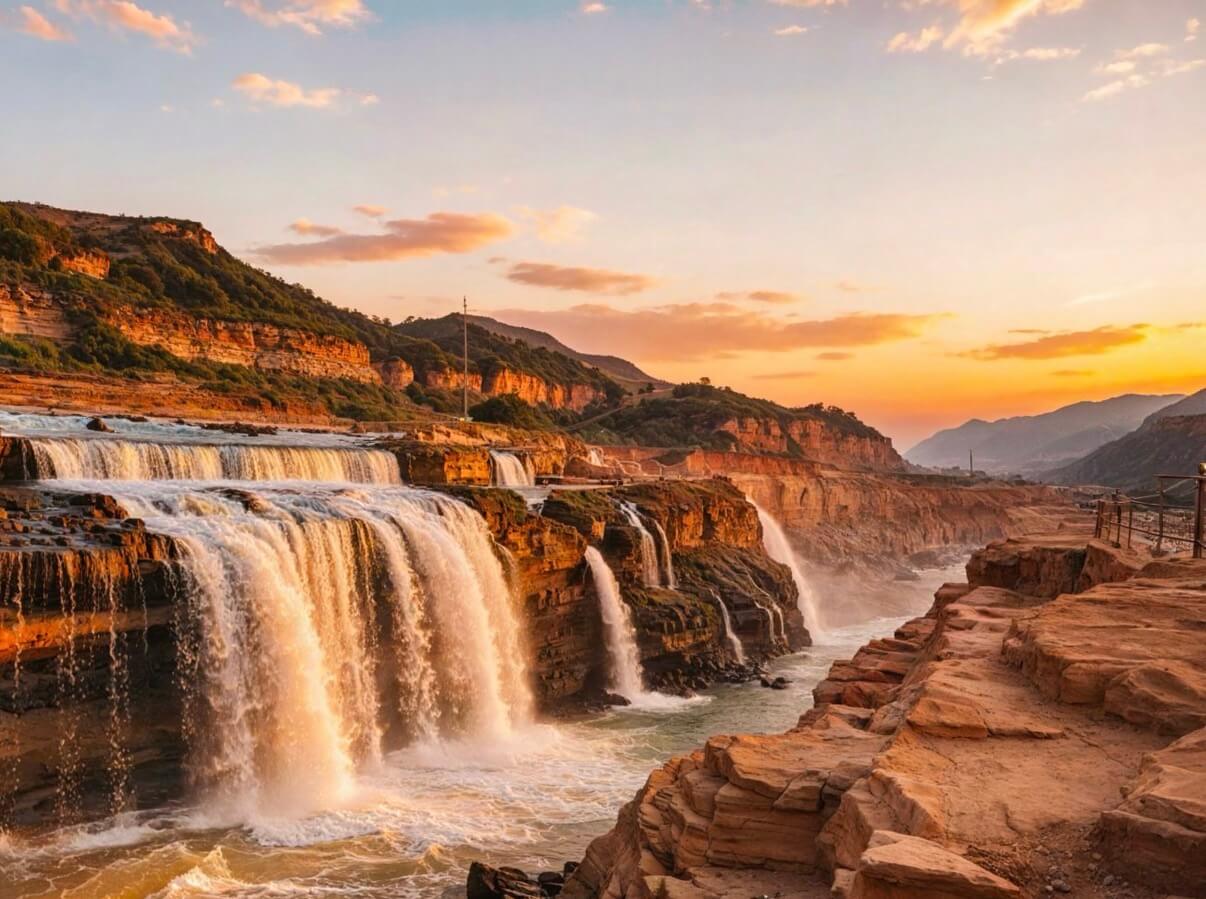
Hukou Waterfall (壶口瀑布)
The largest waterfall on the Yellow River and the world's biggest yellow-hued waterfall — "a thousand miles of river gathered into one teapot spout." Tons of ochre water thunder through a 30-meter-wide gorge, sending spray and rainbows high above the cliffs. Visit in spring for dramatic flood surges or winter for surreal ice formations.
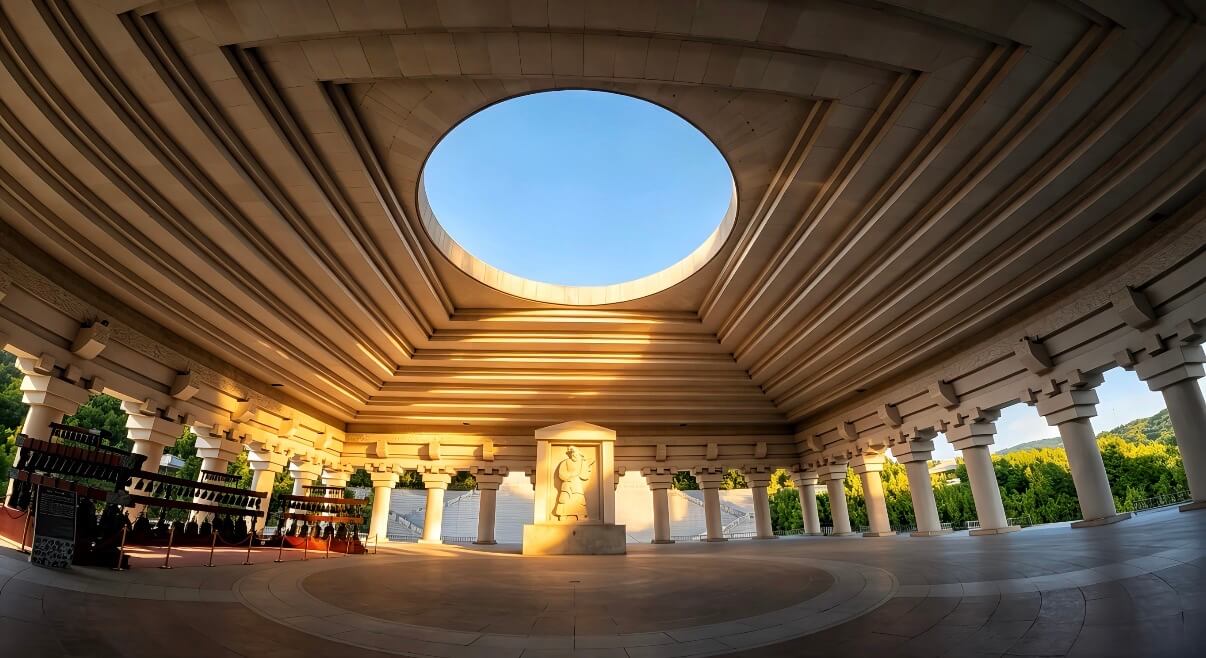
Yellow Emperor's Mausoleum (黄帝陵)
The sacred burial site of the Yellow Emperor (Huangdi), legendary ancestor of the Chinese nation, known as "the First Mausoleum Under Heaven." Set among 80,000 ancient cypresses on Qiaoshan Mountain — including a 5,000-year-old cypress said to be planted by the emperor himself — it has drawn imperial pilgrims and national ceremonies for over two millennia.
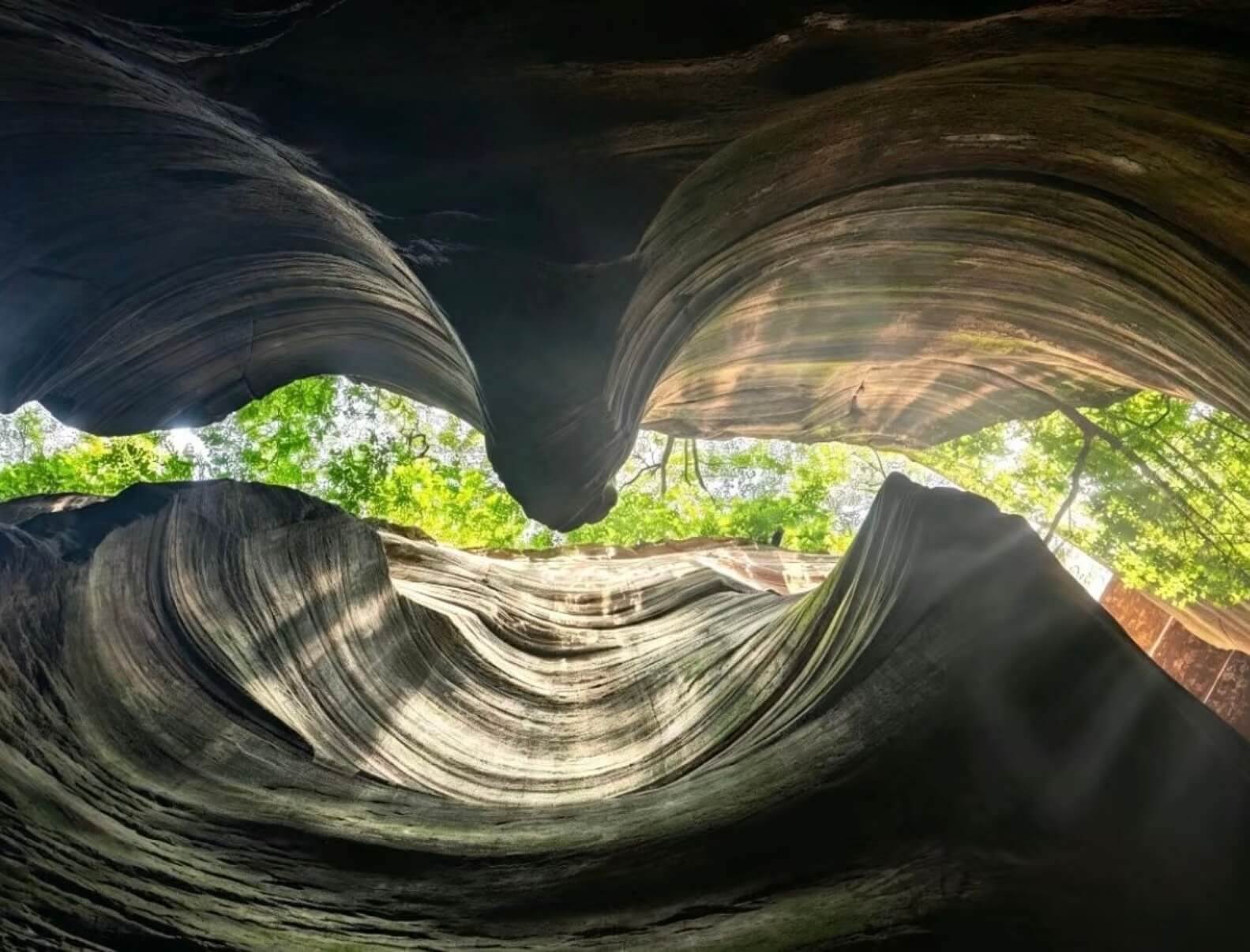
Ganquan Grand Canyon (甘泉大峡谷)
Known as "China's Antelope Canyon" — a hidden network of narrow red sandstone slot canyons carved by centuries of rainwater and flash floods through the loess plateau near Yucha Village. Around midday, sunlight beams down through the wavy rock fissures, painting the ochre walls in shifting golds, reds and purples — a photographer's dream rivaling Arizona without leaving China.
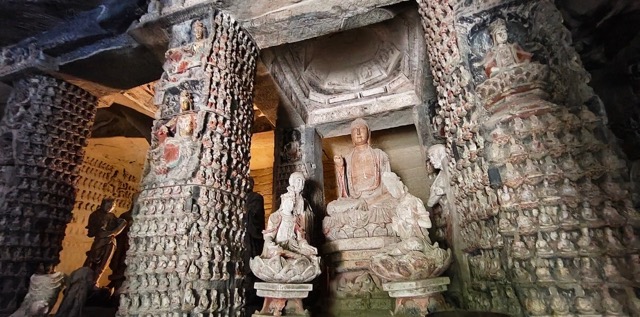
Zhongshan Grottoes (钟山石窟)
One of China's most exquisite Northern Song Dynasty Buddhist grotto complexes, carved into the sandstone cliffs of Zhongshan Mountain from 1067 AD and hailed as "the finest grottoes under heaven" — second only to Dunhuang. The main cave alone shelters over ten thousand Buddha statues and vivid relief pillars, their serene faces and flowing robes remarkably preserved after 900 years.